A roof rack can be useful for everything from bikes and luggage to tools and building materials. But choosing the right one is not just a matter of picking a set of bars that fits your budget. The type of roof on your car, the weight you want to carry and the accessories you plan to use all affect which system will work best.
Start with your car

Source:magnific.com
The first thing to check is how a roof rack attaches to your vehicle. Some cars have raised roof rails and others use flush rails, fixed mounting points or a bare roof. These systems are not interchangeable, so it is important to choose a rack that is designed for your specific vehicle. Most manufacturers and retailers provide fit guides. It is worth using these before ordering rather than assuming a universal rack will fit.
Even two vehicles from the same manufacturer can require completely different roof rack mounting systems. The model year, body style and factory-installed roof equipment can all affect compatibility. A rack that fits one version of a car may not fit another, even if the roof looks almost identical.
Before buying, check your vehicle owner’s manual for any restrictions on roof-mounted equipment. Some vehicles have designated mounting locations, while others may require additional fitting kits. Choosing the correct attachment system from the beginning can save you the trouble of returns, adjustments and potential damage to the roof.
Think about what you want to carry
A roof rack, or a Dachträger in German, for a bike does not have to meet the same requirements as one used for ladders, roof boxes or work equipment. Think about the type of load you will carry most often and check the maximum roof load stated by the vehicle manufacturer. The rack itself also has its own weight limit. The lowest limit in the complete setup is the one you need to follow.
Different types of cargo also require different accessories. A bicycle carrier needs secure mounting points and enough space between bikes. Roof boxes need crossbars with compatible dimensions and spacing, while carrying long equipment may require additional straps or supports.
The following table gives a general overview of common roof rack uses and what to consider before choosing a system.
Think about how frequently you will use each accessory. Someone transporting bicycles every weekend may benefit from a different setup than someone who only installs a roof box for an annual holiday.
It is also worth checking if the roof rack allows you to switch between accessories without replacing the entire system. A versatile set of crossbars can be a practical long-term purchase.
Buy from a reliable supplier
A roof rack has to fit the car properly and be suitable for the weight you plan to carry, so quality matters. Cheap or poorly matched systems can be frustrating to install and may not provide the fit you need. It is therefore worth buying from a supplier that offers clear product information and vehicle-specific options. A website such as Carparts-expert.com can be useful when comparing roof rack systems for different makes and models. Before ordering, always check the dimensions, fitting method and maximum load to make sure the system matches both your vehicle and how you plan to use it.
View this post on Instagram
A reliable supplier should also provide understandable installation instructions, information about replacement parts and clear warranty conditions. These details become particularly important if you plan to use the rack regularly or move it between compatible vehicles.
Customer reviews can help identify practical issues that are not always obvious from product descriptions. Look for comments about fitting accuracy, wind noise, durability and how easy the rack is to remove. Reviews from owners of the same vehicle model are especially useful.
Noise can make a difference
Roof racks can create extra wind noise, particularly at higher speeds. The shape of the crossbars has an influence here. More streamlined bars are generally quieter than basic square bars, although the exact result depends on the car and the way the rack is fitted. If you only use the rack occasionally, you may also want to choose a system that is easy to remove when it is not needed.
Fuel consumption is another consideration. Adding equipment to the roof increases aerodynamic drag, especially when carrying a large roof box or bulky items. The impact varies depending on driving speed, vehicle shape and the equipment installed.
For drivers who spend a lot of time on motorways, aerodynamic crossbars may provide a more comfortable driving experience. Removing unused accessories can also help reduce unnecessary wind resistance and noise.
Check the weight limits carefully
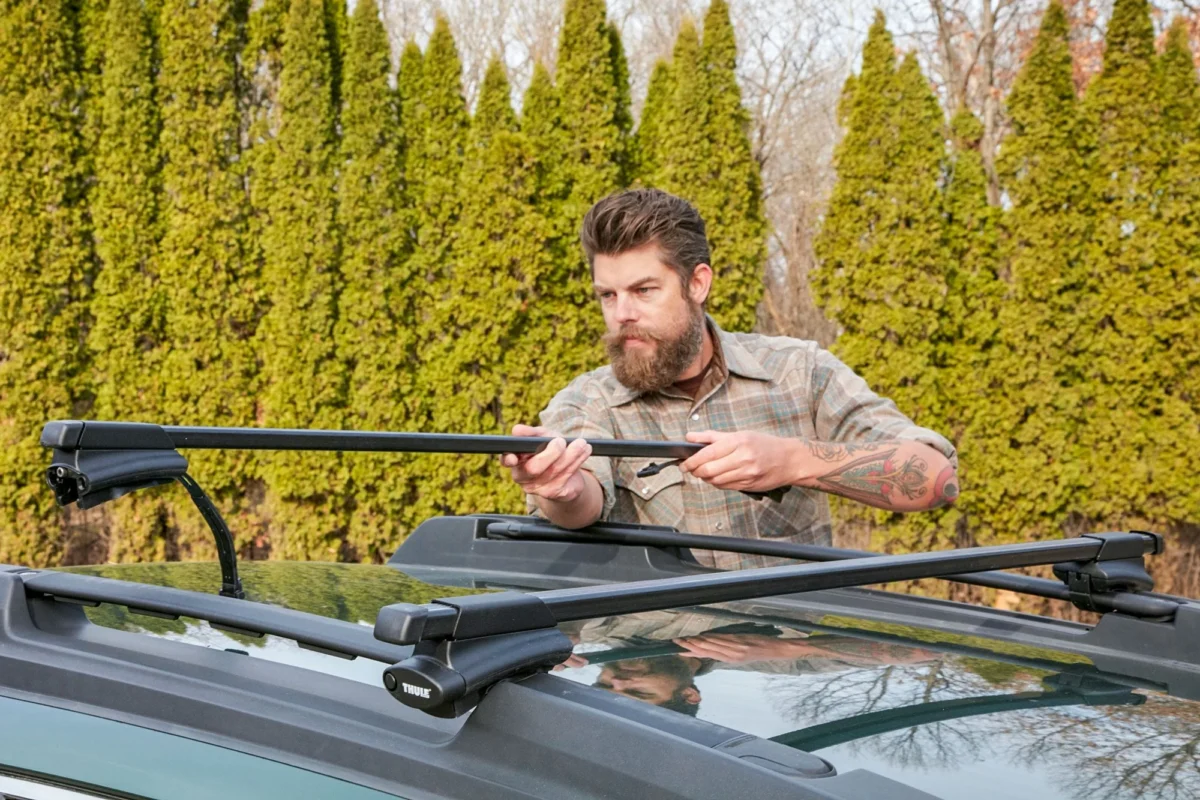
Source: familyhandyman.com
One detail that is easy to overlook is that the vehicle roof, the rack and any accessories can all have separate maximum load ratings. Do not look at the rack alone. The car manufacturer may specify a lower maximum roof load. Also remember that the weight of the rack itself counts towards the total.
For example, if your car has a maximum roof load of 75 kg, the rack weighs 5 kg and the roof box weighs 15 kg, you have 55 kg remaining for luggage, assuming none of the components has a lower limit.
Before loading your roof rack, make sure you:
- Check the vehicle manufacturer’s maximum permitted roof load.
- Include the weight of the crossbars and all mounted accessories.
- Distribute luggage or equipment according to the accessory manufacturer’s instructions.
- Secure every item using suitable straps or mounting equipment.
- Check the load and attachments before starting a journey and during longer trips.
Remember that roof-mounted cargo changes the vehicle’s centre of gravity. Heavy items placed high above the car can affect handling, particularly during sudden turns or braking.
Whenever possible, place heavier luggage inside the vehicle and reserve the roof for lighter, bulky equipment. Never exceed the lowest applicable weight rating, even if the roof rack itself is advertised as heavy-duty.
Match the rack to how you actually use the car

The best roof rack is usually the one that suits your normal use rather than the one with the most features. Do you regularly carry bikes? Then look for a system that works well with bike mounts. Would you use the rack mainly for holidays? Then compatibility with a roof box may matter more. By thinking about this beforehand, you are much more likely to end up with a roof rack that is practical rather than something that spends most of its time in the garage.
Storage and convenience also deserve some attention. If you frequently remove the rack, consider how easily it can be installed again and whether you have enough space to store it safely. Some systems use integrated locks, which can help discourage theft when the vehicle is parked.
Another practical detail is access to the boot. Certain roof boxes and rear-positioned accessories can interfere with the tailgate when it opens fully. Checking clearance before purchase is particularly important for SUVs, estate cars and vehicles with large rear doors.
Compare roof rack materials and crossbar designs
Roof racks are commonly made with steel or aluminium crossbars, and each material has advantages depending on your budget and intended use.
Steel bars are often more affordable and suitable for practical everyday transport. However, they can be heavier than aluminium alternatives, and their shape may contribute to additional wind noise.
Aluminium crossbars are generally lighter and are available in aerodynamic profiles designed to reduce drag and whistling sounds. Many also have integrated channels that accept compatible accessories, making it easier to attach certain bike carriers or roof boxes.
Neither material is automatically the best choice for every driver. Construction quality, load rating and compatibility matter more than material alone.
Crossbar width and spacing deserve attention as well. Some accessories require specific distances between the front and rear bars, while others need a particular bar profile or mounting channel. Check these measurements before ordering rather than assuming accessories from different manufacturers will work together.
Make sure installation and maintenance are straightforward
A roof rack should be securely attached without requiring improvised modifications. Always follow the manufacturer’s fitting instructions and use the specified tools and tightening settings.
If the installation requires a torque wrench, use one that can apply the recommended torque. Overtightening can damage mounting components, while insufficient tightening can allow parts to loosen.
Once the rack is fitted, inspect the mounting points and confirm that the bars are stable. Repeat the checks at the intervals recommended by the manufacturer, especially after long journeys or when transporting heavy equipment.
Regular cleaning can help prevent dirt and road salt from collecting around the mounting points. Inspect metal parts for corrosion and check rubber pads, seals and fastening components for signs of wear.
Finally, remember that roof boxes, bicycles and other accessories increase the overall height of your vehicle. Check clearance before entering parking garages, passing beneath low barriers or using automatic car washes. Remove roof-mounted equipment before using a car wash if the vehicle or rack manufacturer requires it.
Final thoughts
Choosing the right roof rack comes down to vehicle compatibility, load capacity and everyday practicality. Price is worth considering, but it should not be the deciding factor if a cheaper system does not fit correctly or support your intended accessories.
Start by identifying your car’s roof type, then compare compatible crossbars based on the equipment you actually carry. Pay attention to weight limits, installation requirements, noise and the availability of replacement parts.
A little research before purchasing can help you find a roof rack that fits properly, carries your equipment securely and remains useful for years.